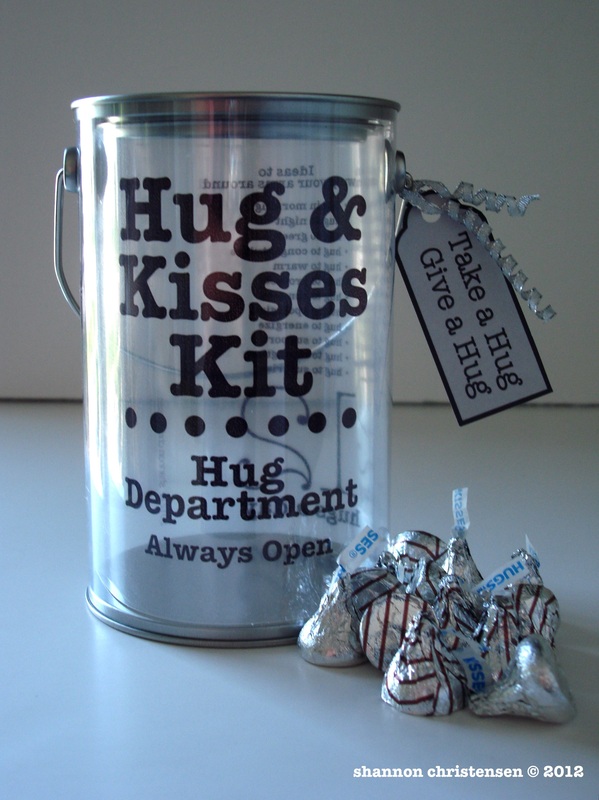
 Print download onto clear ink jet printer transparency. Cut and slide into place. Very easy, very cool. Looks like it's printed right on the container. Family Fitness in 36 SecondsOne act. Three seconds. Twelve times. Equals 36 seconds a day. What’s the magic moment? A hug. According to family therapist Virginia Satir, “The recommended daily requirement for hugs is: 4 per day for survival, 8 per day for maintenance, and 12 per day for growth.” A family’s emotional fitness can be aided by a mere 36 seconds a day. But, the real trick, says neuroeconomist Paul J. Zak, is that the hug has to be associated with a “signal of trust”. Having some sign of confidence in the relationship, or potential connection, accompanied with the hug insures moods more at peace, security increased, and stress released. Efforts can be made to remind us, and family members, of the 36-second hug habit. To strengthen the attachment process and hug therapy in your home I made 2 versions of the Hugs & Kisses Kit. (I threw in the kisses for good measure.) The idea is that the kit has chocolate candies and every time one is taken out, then a hug has to be given to someone as ‘payment’. The kit really isn’t necessary, just a fun reminder to get your family counting and keeping track of heart healthy hugs. Here are a few other times to wrap your head (and arms) around. • hug in morning • hug at night • hug to greet • hug to congratulate • hug to warm • hug to protect • hug to connect • hug to apologize • hug to energize • hug to support • hug to strengthen • hug to surprise Thirty six seconds to increase family fitness of heart and mind. Do you have the time today? 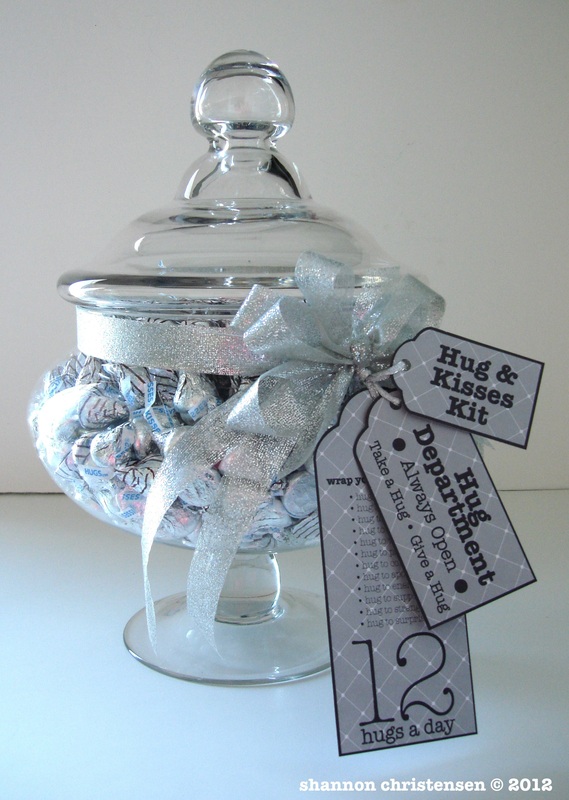 Get the DIY downloadable here @ Idaho Women's Journal for $2.
There's a crafty version and a quick version. I had the quick version of the Hugs & Kisses glass jar out during a party and there were hugs everywhere. Try it out in your home and let me know how you like it.
5 Comments
 1) Do acknowledge them Hello. Talk to them when they come in. Show some interest. Get to know them. 2) Do show respect Grow up. Kids want to be treated like an adult, this is one area in which that works. 3) Do provide food Yum. Food always works. Feed them. Even let them have access to the kitchen. 4) Do be some fun Duh. Do something unexpected from the normal routine. Be a little playful. 5) Do avoid confrontations Yield. This isn't the time to correct your kid. Do that later, where you can discuss. 6) Do remember them Notice. Names, siblings, & unique things about them. Also, how your kid knows them. 7) Do make it peaceful Zen. An environment that's void of contention makes a place people want to be. 8) Do leave a little space Exit. Give them some room. Not the bedroom. But, some talking space to be private. 9) Do like them Enjoy. Everyone has annoyances. Overlook them. See what your kid sees. Be open. 10) Do keep long hours Nap. It doesn't have to be 'open all night' but kids like late nights. Especially weekends.  Bonus: Do treat them like family Include. Everyone wants to belong. Somewhere. Make it you and yours that they think of as 'family' when they need to connect. How you interaction with your kid's friends, and your kid, will benefit everyone. What do you do?
 10 Don'ts When Interacting with Your Teen's Friends 1. Don't try to be cool. Awkward. And painful. It never works when a parent tries to be cool. 2. Don't compete. Loser. You lose when you make it about competing with your kid. Join a ball team. 3. Don't make fun. Ever. Never use your kid (or their friends) as the punch line for a joke. Laugh at something else. 4. Don't always jump in. Know-it-all. Let them figure a few things out. You don't always have to share the answers. 5. Don't look for friends. Creepy. Don't make your kids friends your friends. On FB or at home. Find your own. 6. Don't be pushy. Bully. It doesn't have to be my way or the high way. Let some things ride. 7. Don't be fake. Phony. Embrace & express who you are & be authentic. No need to use a bull horn. 8. Don't take over the conversation. Windbag. Be a small part of the conversation, don't be the conversation. Sometimes, don't even talk. 9. Don't be sensual. Ewe. Do I even need to say anything? Sadly, yes. Turn your sexual brain off. Period. 10. Don't try to outshine. Diva. The spotlight shouldn't be on you or how you feel. Your kid is the star. Bonus: Don't embarrass. Jerk. This isn't about you. Then, again, it's all about you. Kids don't want to be embarrassed at all costs. You have the power to make sure that doesn't happen to them, or their friends. Make them comfortable, and keep them coming around. You won't end up being the jerk parent, or any of the above kind either.  What other "don't" would you add to the list?
Did a little surfing down memory lane and came across an article that I contributed to a long time ago and forgot about. It was about TV viewing and what can be done to curb the amount of time watching it. (We've never been big television watchers. There's just so many other really fun things to do.) I'm glad to report the things I said yesterday (relatively speaking) are still valid today. You can see if you agree. 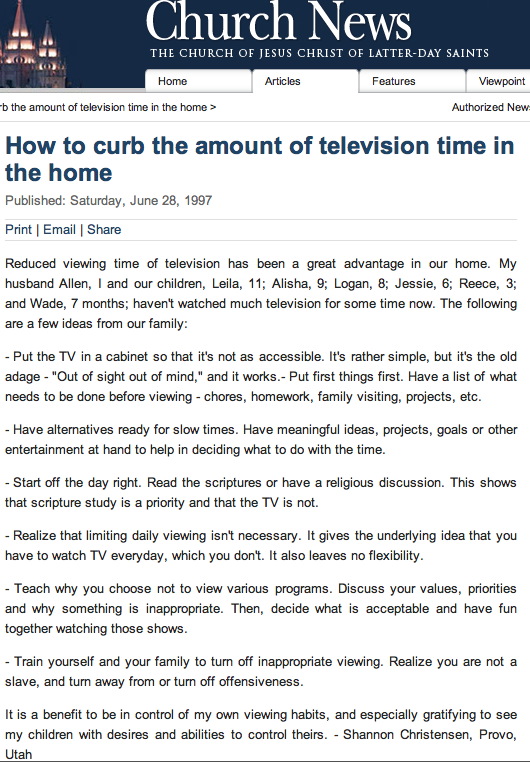 Well, yesterday I talked about gift giving. Today I have something else on my mind. This morning I read an article about a NYC public school teacher who told her class of second graders, during a geography lesson, that there was no Santa. She was discussing the North Pole and the children assured the teacher they knew where the it was because Santa lived there. The teacher decided to clarify that myth and said that there was no Santa. Also, she felt a need to tell them that it was their parents who put presents under the tree for them, not Santa. What exactly that had to do with geography I don't know. After the article, there ensued a back and forth in the comments section about whether kids should be told the truth, if they should even be told to believe in Santa at all, and every opinion in between. I have issues with Santa myself. I've never told my kids there was and never told them there wasn't. When they asked me I would always respond with, "What do you think?" Sometimes they'd say what they thought and sometimes they didn't. I let them talk. So, the belief in the man Santa has been perpetuated very little, if at all, in our home. But, the spirit of Santa and Christmas has. As an artist I'm very aware of symbols and their use. We use symbols in society all the time. Santa Claus is a symbol. A collective symbol of the intangible attributes of joy, wonder, mystery and surprise that we have few other means to share and pass on. For most of society we have mutually agreed to do that. Just as we've nationally decided that the American Flag is a symbol of patriotism, wedding rings a symbol of fidelity and love, and yellow ribbons a welcoming back home. Whether we choose to embrace these icons and the ideas they represent are personal choices.  Using a cut open apple as a symbol for getting to the core of the issue. Opening up to see what's really inside. A lot of times people get so emotional that they miss the mark about what the problem is. The real issue with this situation is that this teacher believed, and acted on the idea, that it was her RIGHT to tell these children. She decided that Teacher usurps Parent. Put another way, Teacher displaces, supplants, confiscates, or cuts out Parent. This is a policy that is being perpetuated in some schools - teacher has more right than a parent to decide - on many issues like gender, sex, and religion. The problem with not seeing the core issue is that Parent then relinquishes, surrenders ands hands over their right to Teacher. 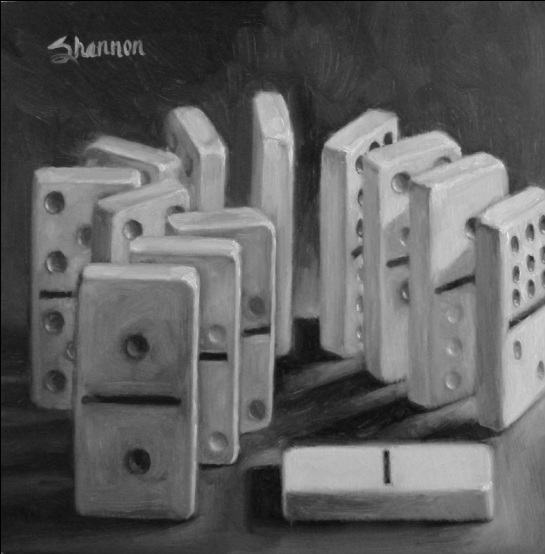 Dominoes are used to show the effect one action has on others & why some things are worth taking a stand on. This teacher decided in that moment, without care, concern, nor consensus of others, that she would take on the role of Parent. In her "truth-telling" did she really have regard about how the truth was told? How the children might respond to it? That it might shatter their (not her) belief system? Is this truth age appropriate? Did she let parents know that she would be busting this tradition so that they could be prepared for the aftermath? Did she let the parents know after the fact with a note home? Did she teach about symbols in society? Did she teach about the different methods of gift giving? Did she teach about celebrations? Did she teach any historical context? These are things a real parent are concerned with. That differentiates Teacher and Parent. This teacher didn't care enough about the children, nor was she willing to take on the real role of parent, to consider the outcome and welfare for those children. I for one want to be a real parent, not some make-believe one that this teacher is trying to be.
I have 8 children and have been in a waiting room (or stuck at some other unforeseen place) a time or two with a toddler. In fact, often with several toddlers at a time. I found that these situations were not just the regular-boring-kind but the outburst-boring-kinds for kids. One of the things that worked for me was the Mini Kid Kit. It was just a small bag in my purse that had travel size things, (tiny flashlight, metal play keys, mirror, bracelet, heavy necklace, hair clip, etc), items they never got to play with under normal conditions. Basically, anything that they were curious in and weren't allowed to play with; or small toys that they usually couldn't touch because they were "mine", kept their interest when they were outburst-bored in a public place. It helped to keep them quiet on many occasions. This helped me not become the outburst mommy of the outburst toddler. If I felt like there was something in my power to do I became less frustrated and more in control of the situation. Toddlers, especially on the verge of tantrums, definitely need a mom in control of herself and the situation. The Mini Kid Kit was a tool for me to do that. But there are 3 keys to the Mini Kid Kit 1) You don't give the child the whole bag, bring out items one at a time 2) They don't see the bag in its entirety so they don't fuss for the next item before they've explored the first 3) You take away the toy (and give them the next one) before they get bored with it Rotate and re-rotate them around. Hopefully, this little tip will help you. Go ahead. Grab a ziplock bag, add a few things in it, and put it in your purse. Done.
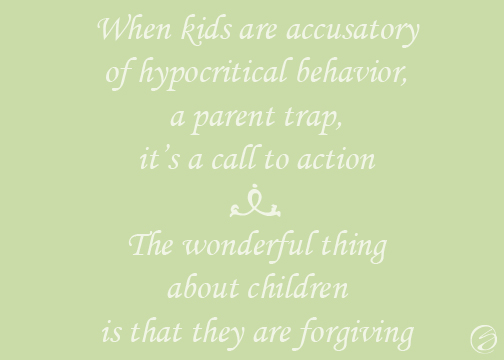
When my older children were young we decided to omit certain words from our family vocabulary. Words like "stupid" and "shut-up" we felt weren't respectful of each other and shouldn't be used toward each other. On one particular day I was frustrated with something and called it "stupid". Oh man, my children were indignant. They didn't differentiate between things and people and were convinced that my behavior didn't match up with our established expectations. And when they went to church the following Sunday they reported my bad behavior to their teachers - "my mom said the 's' word!" Luckily for me, I learned to control those words, even toward things, and their trust in me was restored. Though this may be minor on the scale of moral mishaps the idea of hypocrisy can be very destructive. Before we continue I like to define the critical words in the conversation so that we start out on the same terminology page, so to speak. HYPOCRISY the practice of professing standards and beliefs contrary to one's real character a pretense of having a virtuous character contrary to actual behavior a pretense of moral or religious belief that one does not really possess a pretense of having some desirable or publicly approved attitude an act or instance of hypocrisy dictionary.com To sum up, hypocrisy is practiced pretense. At times kids, teens in particular, have a real problem with their parents because of this practiced pretense or hypocrisy. Parents who don't act as they preach fall into this parent trap. The integrity trip-up, hypocrisy. And teens hate hypocrites! It doesn't have to be "major" deviations from professed piousness, minor detours will accomplish parental captivity. For those of religious belief, we automatically set ourselves up. We are preachers of something and when we fail at what we teach we are by definition hypocrites. Parent Trap: |
|||

| Parent Trap • Hypocrisy.pdf |
CHECKLIST FOR CHANGE
• determine that the offense is worth the efforts to change it
• dedicate yourself to living in harmony to your code of conduct
• declare your intentions of working to improve a behavior to others
• draw on the goodness in you, in others and the love of family
• devote your best energies to rectify your reputation
• don't underestimate the power of your example
GOING ON A FAMILY VACATION?
HOW TO HAVE LESS STRESS • PART 2
Family Vacation Defined:
long-term committed, members of a household sharing a period of time,
suspending regular routines away from home,
devoted to emotionally fortifying kinship
through pleasure, rest, or relaxation
1 • LOSE THE ROUTINES BUT KEEP THE RULES
Routines are your regular, customary courses of the day. A morning routine might be something like this - a daughter unloads the dishwasher, a son makes the lunches, a dad cooks breakfast, and a mom gathers backpacks, coats, etc. Those are the typical tasks set up for the daily routine. But, the rule behind the routine that drives the action is - everyone contributes and helps move things along to the next thing. Rules are the principles behind the conduct and help to create conditions of order, understanding, and harmony.
Since the idea of family vacations are to be away from regular routines they are especially in need of rules. Everyone in the family might know what the routine is, because it's the action part of the day. But, it's important to establish and articulate the rules and reasons to the actions. That way your family knows what conduct is expected. Even on smooth running days, family members don't always do what they know they are supposed to do. On vacations, it's not really clear what is expected. If you apply the rule, like everyone contributes to move things along, then they know they should be looking for something to do and not just sit there waiting for parents to get it all together.
2 • DO THE DETAILS
"It's all in the details" is an idiom which means to consider all the information, down to the last, well, detail. When you're at home you can say, "we'll meet you at the park" or "pick up something from the store" and it's likely your family automatically knows where it is and what you meant. Being away from home is unfamiliar, especially if it's a first time visit to a place. On vacation, having the details, (who, when, where, how, why) help family and friends know what is going on, when it's going on, who's supposed to be there, where there is, how it's going to happen and what's needed to make it happen.
If you have events that you are going to or places you are going to visit have the phone numbers, addresses, maps, reservations, times, tickets, seating and website URL combined. If you have many people and many vehicles going to the same place, designate drivers and riders to specific cars. If you need to take food, clothes, towels, sleeping bags, or extras (inhalers, glasses, etc) to a given activity, list it. Whatever the activities, just mentally go through the process like you are actually doing it and list the pertinent details. Anticipate what someone might ask you, answer it on the list. Keep notes to add to it and the written details become a record to keep.
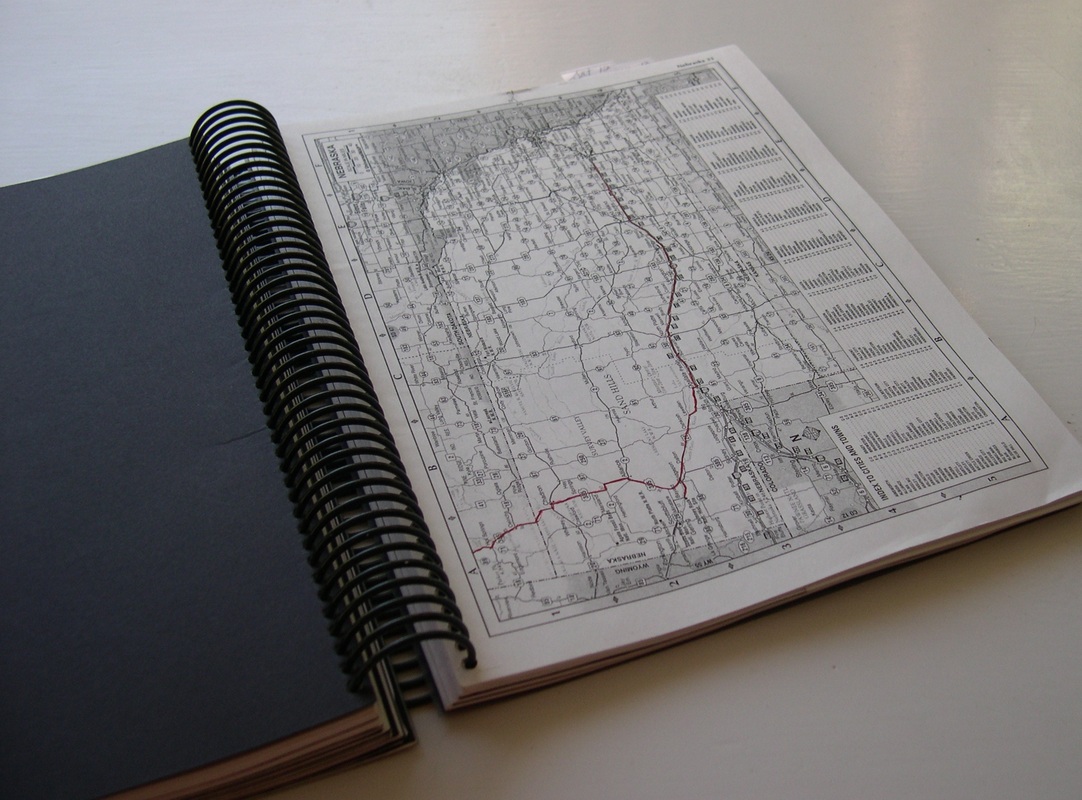
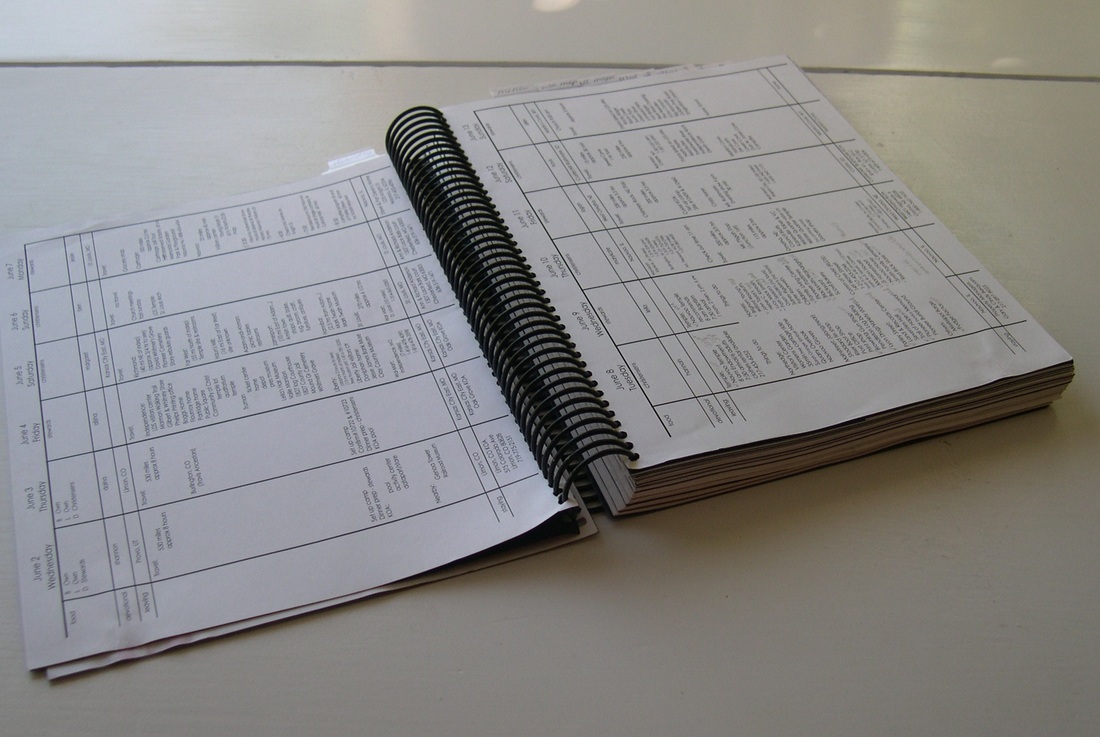
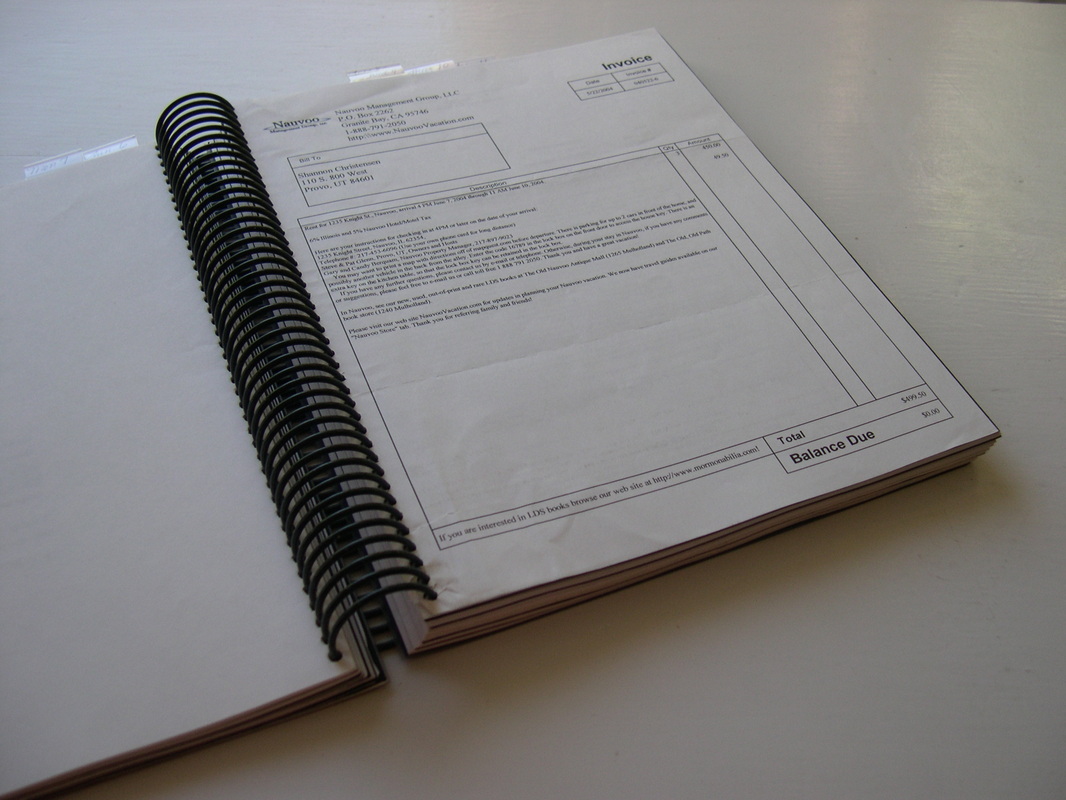
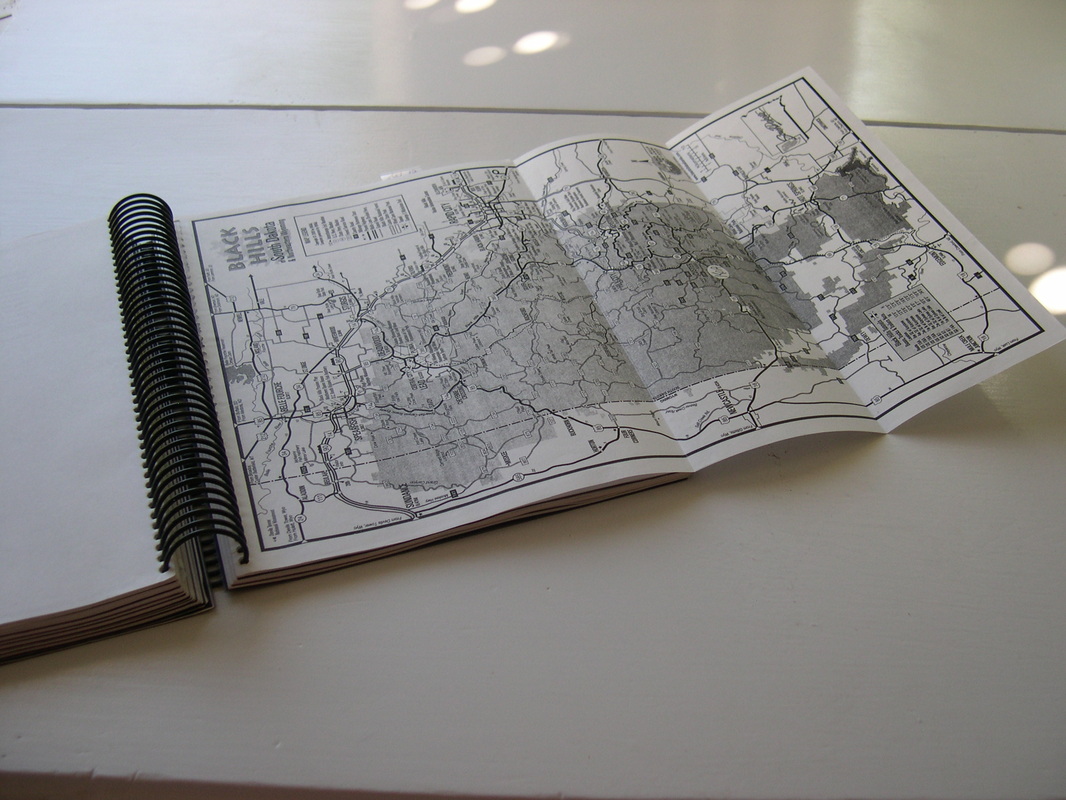
Having all the information is not the same as sharing it. Make it accessible to others. Put everything in a book (we've called it a travel bible before), on a white board (everyone takes a photo of it with their phone's camera), or online. Post the plan where ever the info can be easily had by others. All this will cut down on the stress of forgotten things and people, as well as, the constant information, seeking questions. This puts you less in the middle of it and also helps other's ability to be informed.
Images of the Travel Bible from our Trip • click for slides

3 • SKIP THE SCHEDULE
Vacations should be fun. And sometimes fun means spontaneously rearranging the schedule or going with something not in the plan. This may seem counter intuitive with the last tip. But, doing the details actually helps with skipping the schedule. When a change is made, then you know what needs to be addressed because of the plan details. You can quickly make changes, cancel something, or know if you can add an extra without leaving some detail undone, some call unmade, or someone left hanging. And you can't just not plan anything, that's a formula for family vacation boredom. Having a plan with details, along with leaving yourself permission to skip the schedule makes for less stress and open for unexpected excitement.
4 • SIMPLIFY ANYTHING & EVERYTHING
Vacations are meant to break from routine, be less complicated, take life easier. Simplify anything and everything you can for vacation by planning and packing with the idea of reducing your output of time and energy while in the middle of the family vacation. This takes more effort before you leave but lowers the level of stress from silly things like, "I can't find my socks!" to "I thought you knew how to get to Aunt Mae's."
Pre-vacation - pack outfits in labeled bags, attached with jewelry in smaller bags. Pack kid clothes with undies & socks folded inside tied with string. Everyone's special occasion clothes can be packed in one garment bag. All a meal's ingredients can be put in a box. First aid and Emergency kits restocked and left in the car. Maps and directions can be printed and put in a file. Add rest and food stops to the file as well. Reduce what bulk you take by putting games, books, music and interesting sight seeing information on a laptop. Pre-plan, put off, or auto respond blog posts, Facebook connecting, email responding and similar internet activities.
While on vacation, consider that this isn't the time to cook gourmet meals, or take on extra projects or make major detour stops. There's a temptation that since you're going to be somewhere that you might as well slip in that extra stop, or swing by those other family and friends, or add that one other activity. The family can be stressed out by the one extra thing.
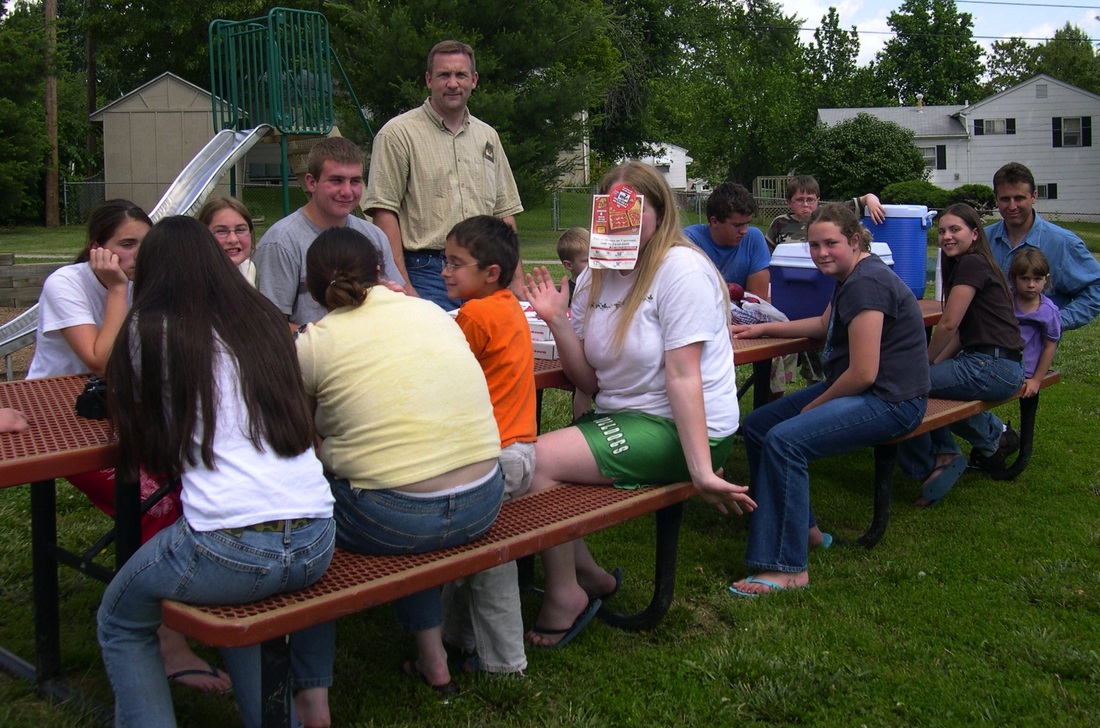
5 • GOODIES ON THE GO
I cannot overstate the attraction of getting a goody bag. The anticipation, attainment, and amazement can gladden slow moments and engage for long stretches of time. Even adults become giddy over goody bags, except they call them by a more sophisticated name now, Swag Bags.
The bag's contents are never really expensive. The goodies can be toys, puzzles, how-to books (tricks, origami, beading, or jokes), mini games, flashcards, sketch books, magazines (beauty, ammo, cars, surfing, etc.), fiction, etch-a-sketch, music and the list can go on. I've used the Simplify Everything and Do the Details methods and put together goody bags and written the person's name on the outside and listed when they can have the bag. On long trips, I would do a morning, afternoon, and evening bag with the times that they could open them. I also gave a snack bag as part of the goodies. The snack bag obviously has snacks but it can be gotten into whenever they want. I usually give it in the morning and they can do with it how they please. But, when it's gone, it's gone for the day. Again, I label everything so that if it's lost in the mixup then they can easily figure out who's is who's. The beauty of Goodies on the Go are the benefits of creating less stress and more fun.
Also, when getting these goodies together it makes me think of the individual. What the person likes, doesn't like, what they'd want to do or not do, basically thinking about what type of person they are. This helps me to start really thinking about them, examining who they are and understanding what I might do for them. This starts to create a bond by opening my mind and heart to them. This outgrowth of goody bags is the start to creating or strengthening a bond with that person. When the person receives the goodies that you have specifically picked out, with their personality in mind, then the attachment is made.
Just prior to a vacation is a perfect time to start thinking about your family one on one, and open ideas to how the family vacation might be spent making the bond stronger. I've employed this Goodies on the Go mindset for trips as well as other times. It has served me, and my children, well on many occasions. (It's even served the Boyfriend on occasion as well, though he doesn't even know he's been swagged!) It's another invaluable tool in the Agent Parent's Arsenal.
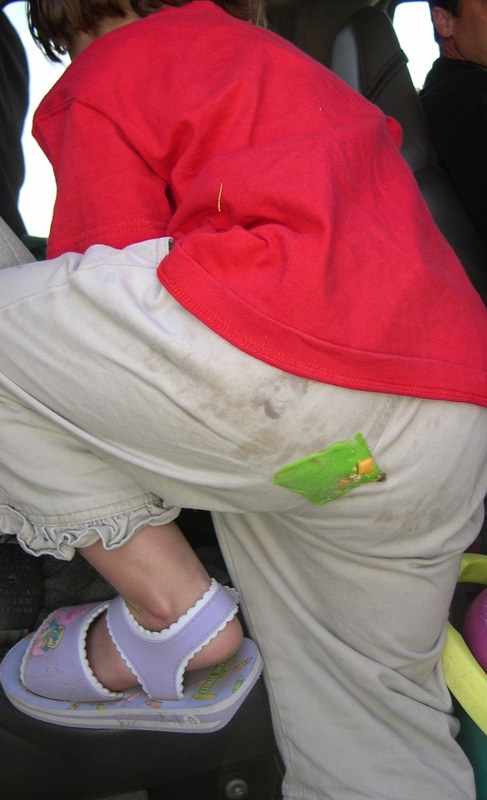
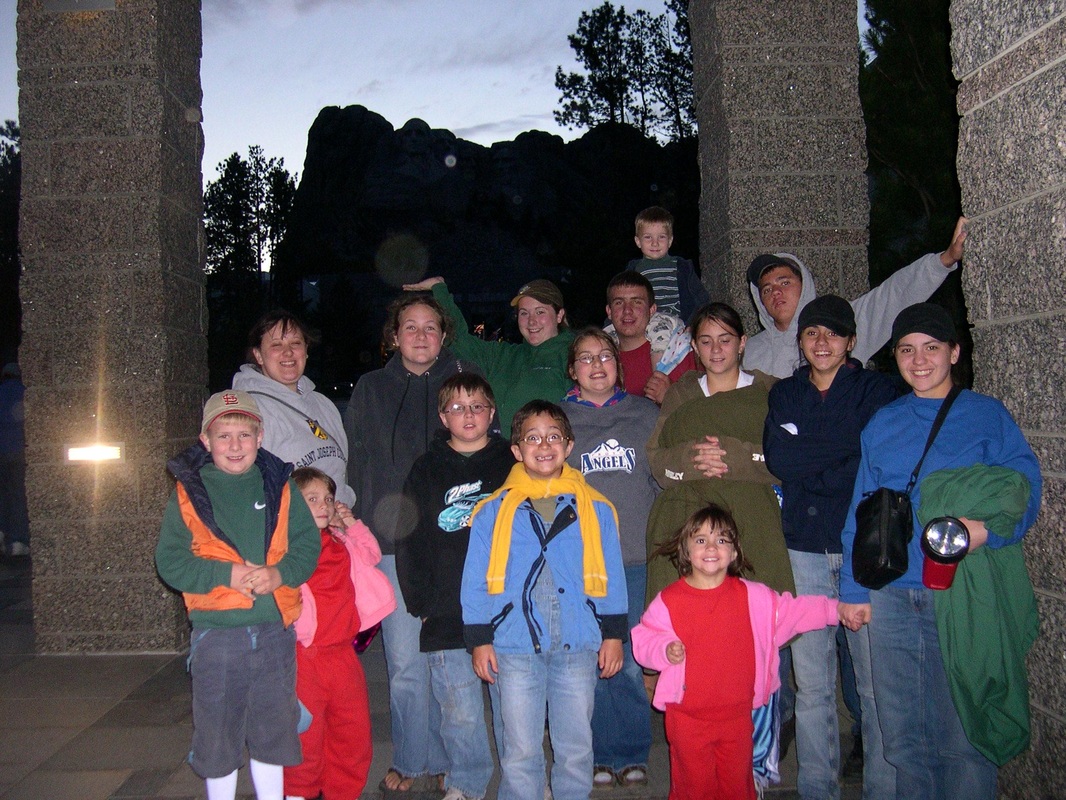



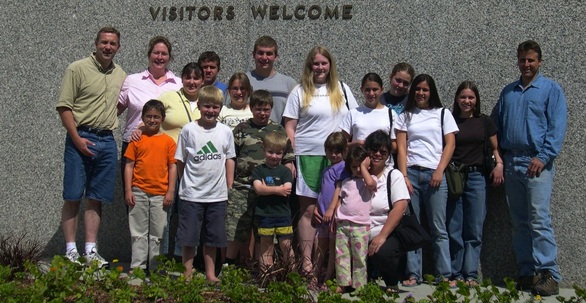
Usually when I think family vacation, I don't think, ahhhhhhhhhhhh. Maybe it's me. We don't family vacation the "resort" way. You know, in a hotel, where other's cook the food, make the beds, clean the rooms when you're away and leave fresh towels. We've mostly camped to and from our destinations, or stayed with extended family and friends. I adore my friends and family, but since when is staying in someone else's house or a campsite a vacation for a mother?
And really, is there such a thing as Family Vacation? A vacation is "a period of time devoted to pleasure, rest, or relaxation... suspending activities" according to thefreedictionary.com. It also says that family means, "all members of a household... who have long-term commitments to each other". I think that vacations should also add, "being away from home" otherwise, it's a party, not a vacation. By definition, so far, a family vacation is long-term committed members of a household sharing a period of time, suspending regular routines away from home, devoted to pleasure, rest, or relaxation. "Family Vacation" seems like an oxymoron by that definition. Much of the time, a family with children isn't restful or relaxing. And some of what goes on with families is needful, helpful, and satisfying but not necessarily pleasurable. There's more to "family" vacations.
Vacations are sometimes called "escapes" because of the pleasure seeking priority. We go on family vacations because of the people we're going with. Our intention is to be with them, not to escape them for the sake of pleasure. Those are different types of vacations. We want to strengthen our familial relationships, that's the point. With this in mind, family vacation can be define as long-term, committed members of a household sharing a period of time, suspending regular routines away from home, devoted to emotionally fortifying kinship through pleasure, rest, or relaxation.
Family Vacation Defined:
long-term committed, members of a household sharing a period of time,
suspending regular routines away from home,
devoted to emotionally fortifying kinship
through pleasure, rest, or relaxation
Why define "family vacation" anyway? Because definitions help clarify the meaning of something, which in turn, helps in the carrying out of something. Understanding the real purpose at the beginning of a family vacation makes all the difference about how you feel at the end of the family vacation. The reason will help guide everything around picking, preparing, and the process of being together.
It took me a while to get to the stage of enjoying family members on family vacations. It seems like an obvious distinction "family" vacation but in the family fray it was lost to me. Remembering that the whole point of the time together should be "devoted to emotionally fortifying kinship" guides me in a whole different way. A way that makes family vacations more awwwwwwwww than ughhhhhhhhhhhhh.
Watch for part 2 tomorrow.
• G.E. "Awesome party, we need to do it again sometime."
• K. A. "Heck yes we do."
• K.S. "I had fun at [his] party, he needs to do it again this month."
• S.W. "...this was an amazing party, thanks for inviting me."
• D.S. "Great party... you have to do it again sometime."
• J.F. "Easily the best party ever, I thank you and your parents."
For a teen, putting on a party puts him/her in a vulnerable position. They are setting themselves up for judgement from their peers. That can be stressful, especially if you don't know what to do. Since my son's party turned out to be fun (and my other's children's parties as well) I thought I'd share some of the behind-the-scene party plan so that you and your teen can have confidence in putting on a party of your own.
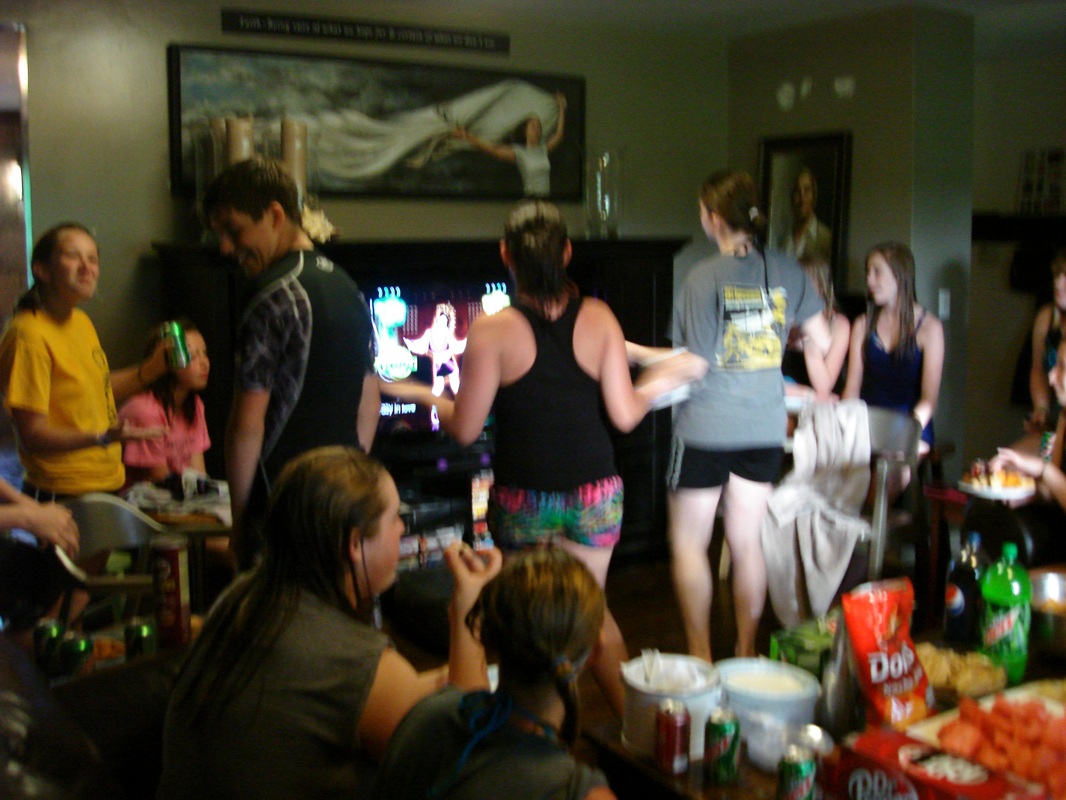
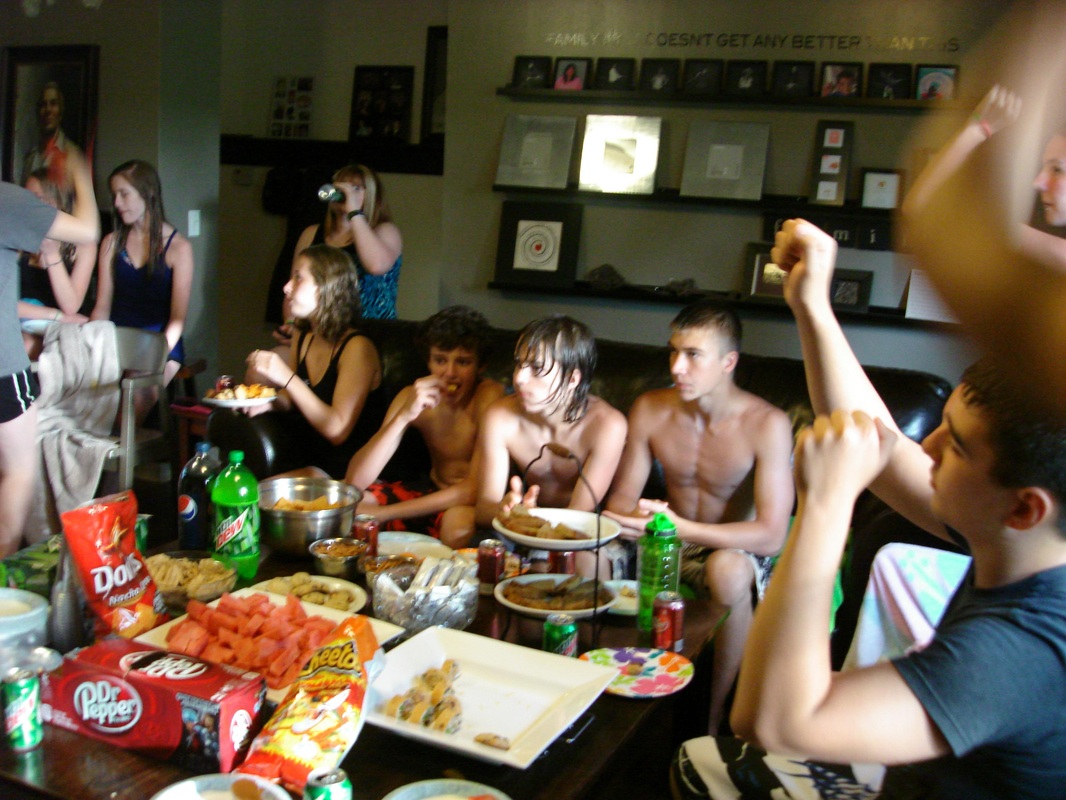
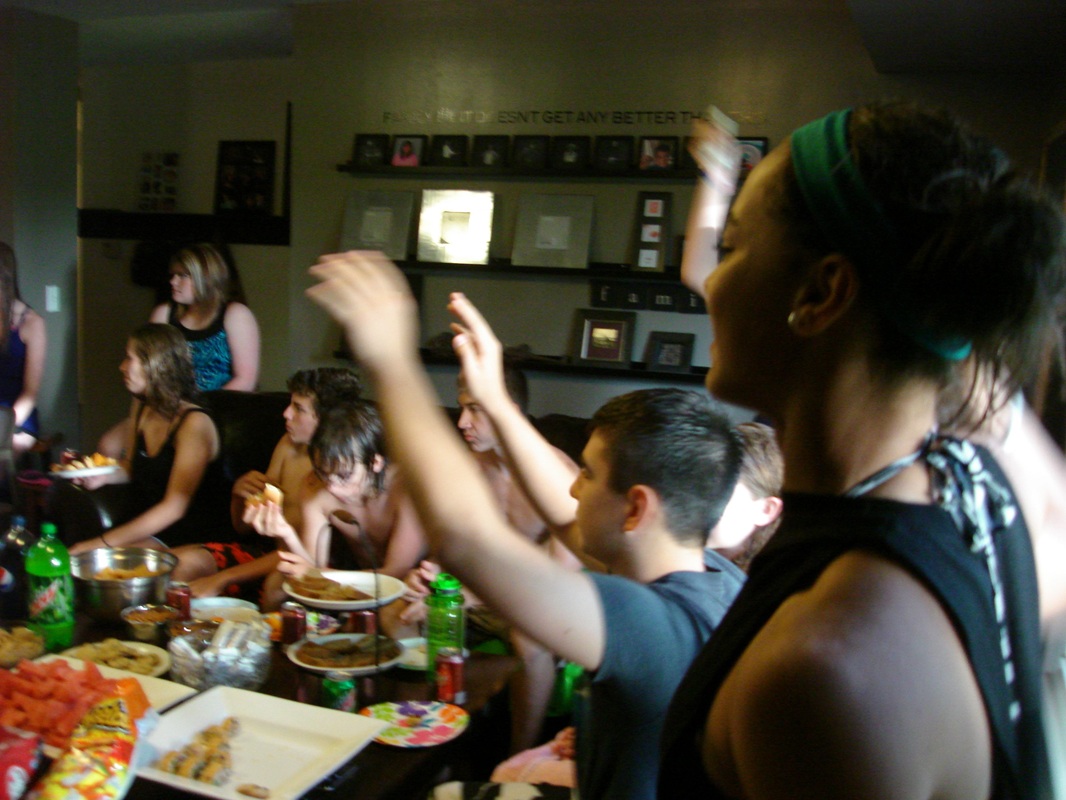
HERE ARE 5 TEEN PARTY TIPS TO HELP
1) INVITES
1) comfortable because they know someone else that is going to the party and can arrive together,
2) it's not a clique because it's not all one group and
3) they will have a chance to meet other kids that they my know by sight but have never had a chance to talk to or interact together.
2) HOSTING
1) smile, and not be stressed but relaxed and enjoy the party, no one likes an uptight host or parents,
2) know how to introduce each other, tell them thanks for coming and that you're glad they're there,
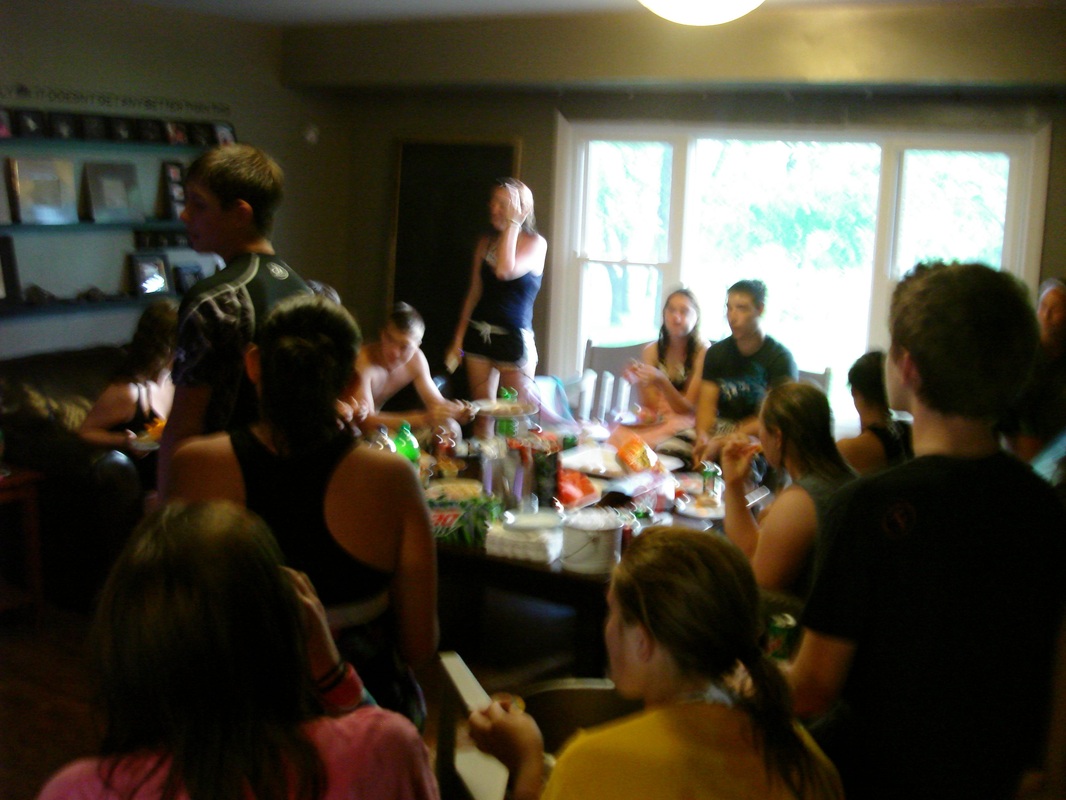
3) carry the conversation, in the beginning, when there are not too many people (see photo below) and so they don't leave their friends in awkward silence.

3) FOOD
1) have one thing they for sure like at the party
2) it will make them feel 'invested' in the party and that they 'have' to go when they might feel a little nervous about going,
3) it helps with the cost, especially if your house turns into the "party house".
4) ATMOSPHERE
1) Music. There's bound to be silence in the beginning as guests arrive. Have some music playing so there isn't that awkward what-do-I-do-now silence and they panic. Don't judge a party by the first half hour.
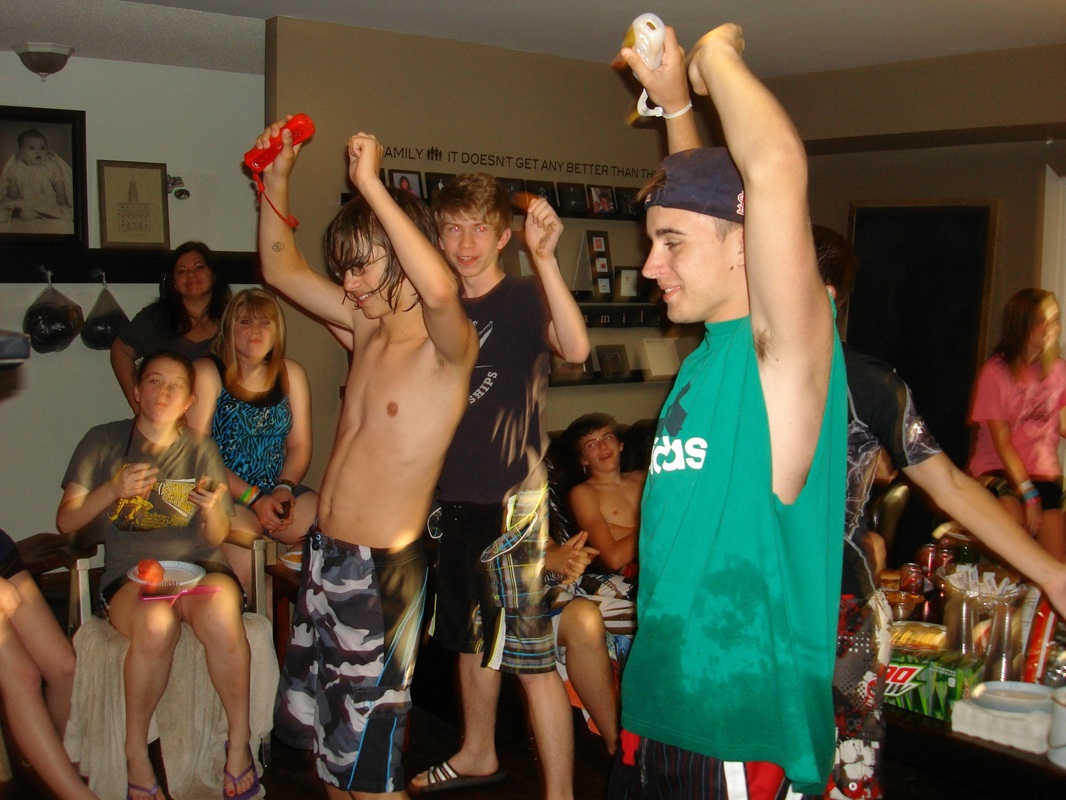
2) Do. Have something for them to do - make food, Wii Just Dance®, swim, water games, etc.
3) Record. Put out cameras and video recorders for them to use and catch some of the action. They can replay, relive and laugh about it.
5) CHAPERONS
1) your kid avoid being put in an uncomfortable position because of your presence, you can do a "pass-through" (walking through the room to do something) or "stand-a-few" (just coming in to stand and watch the game, movie, or whatever, for a few minutes, see the photo below) several times during the evening,
2) make other kids feel ok that if one of the other kids starts acting lame that the parent will come in and intervene somehow,
3) you get to know your kid's friends and they get to know you, and your kid might see that his/her friends think you're kinda cool for letting them have a party.
What other tips have worked for you and your teen?
Archives
August 2012
June 2012
May 2012
March 2012
February 2012
January 2012
December 2011
November 2011
October 2011
September 2011
July 2011
June 2011
May 2011
April 2011
February 2011
December 2010
October 2010
September 2010
August 2010
July 2010
June 2010
Categories
All
Activity
Appreciation
Art
Art & Books
Articles
Bitesized Organized
Biz
Branding
Chores
D I Y
Downloads
Exhibitions
Family
Frame Art
Gifts
Graphic
How To
Kids
Marriage
Moments
Morals
Opinion
Paintings
Parenting
Parent Traps™
Parties
Photos
Policy
Project
Projects
Quick Tips
Ring Thing
Shortcuts
Social Media
Teens
Thoughts
Tips
Trips
Values
Wedding
Women
Work
Youth
Yw
 RSS Feed
